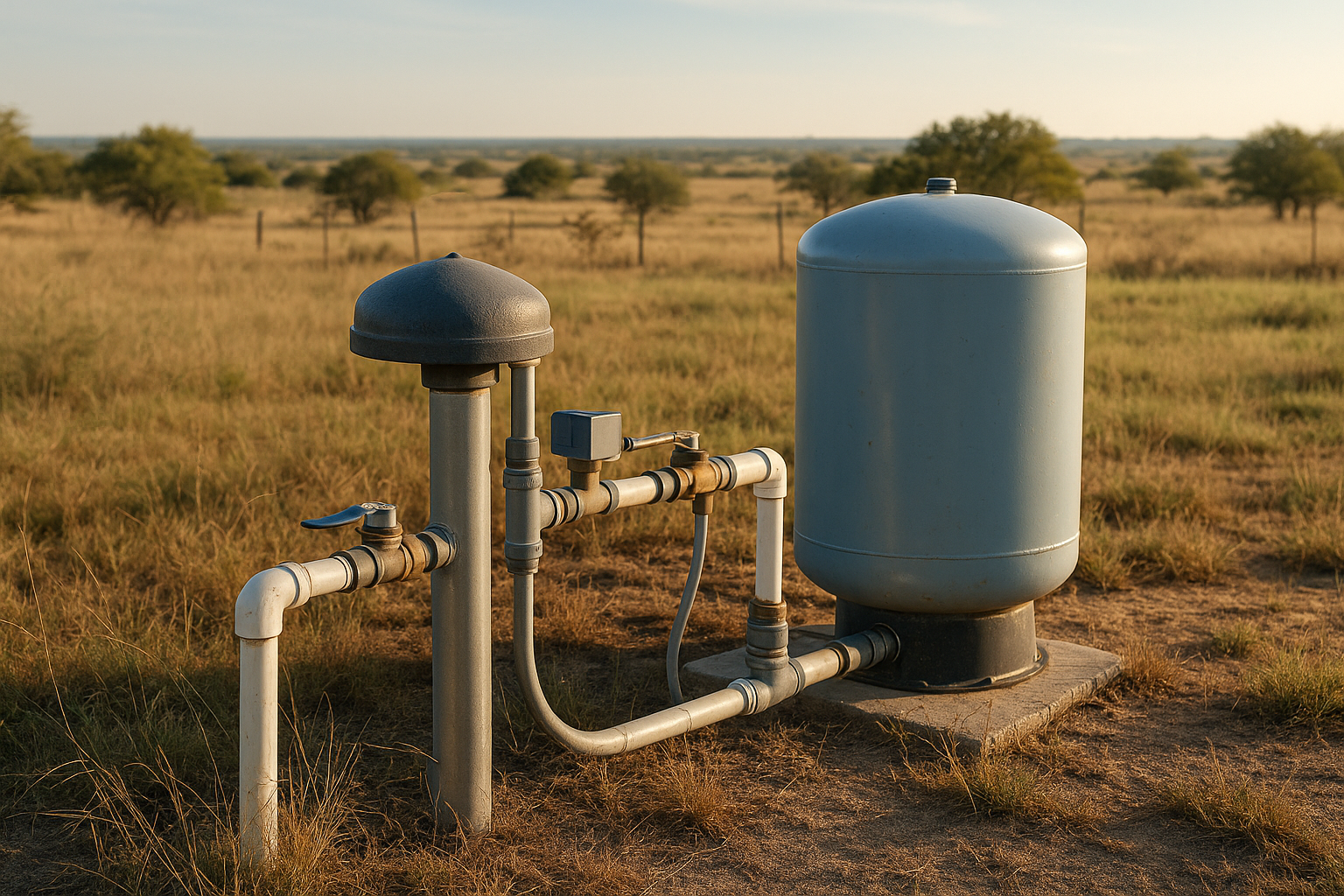
Well vs. Co-op Water: Choosing for Your North Texas Build
Drill a well or tap the co-op line? How the water decision actually gets made on North Texas acreage — without pretending there’s one right answer.
Every acreage build starts with the same quiet question: where does the water come from? Around here the answer is usually a private well or a rural water co-op tap — and the right choice depends on your tract, not on internet debates.
What a well gives you (and asks of you)
- IndependenceYour water, your land, no monthly water bill. For a lot of families, that’s the whole point of acreage.
- Upkeep is yours tooPumps, pressure tanks, and water quality testing are homeowner responsibilities. Not hard — but real.
- Depth is the variableWhat the well hits, and how deep, varies tract to tract. Neighbors’ wells are your best early clue.
What co-op water gives you
- PredictabilityTreated water, steady pressure, somebody else maintains the system.
- A meter and a lineAvailability and distance decide the real cost — a tap at the road is a different project than a line run deep into the tract.
- District rulesEach co-op has its own connection process and timelines. We check early so it never blocks the schedule.
“Ask the neighbors what their well hit. Ten minutes of fence-line conversation beats a week of guessing.”
Rural water rule one
How we settle it on a real build
It’s a site-work line like any other: we price the realistic options for your specific tract — well, tap, or both where it makes sense — and you pick with the numbers in front of you. That’s the same open-book approach from our cost guide, applied to water.
Keep reading
- What rural site work really involves
- Build on your land: the full picture
- 8 land-buying mistakes in Parker County
Not sure what your tract needs?
Send us the location — we’ll talk water, septic, and power for your specific land, openly.