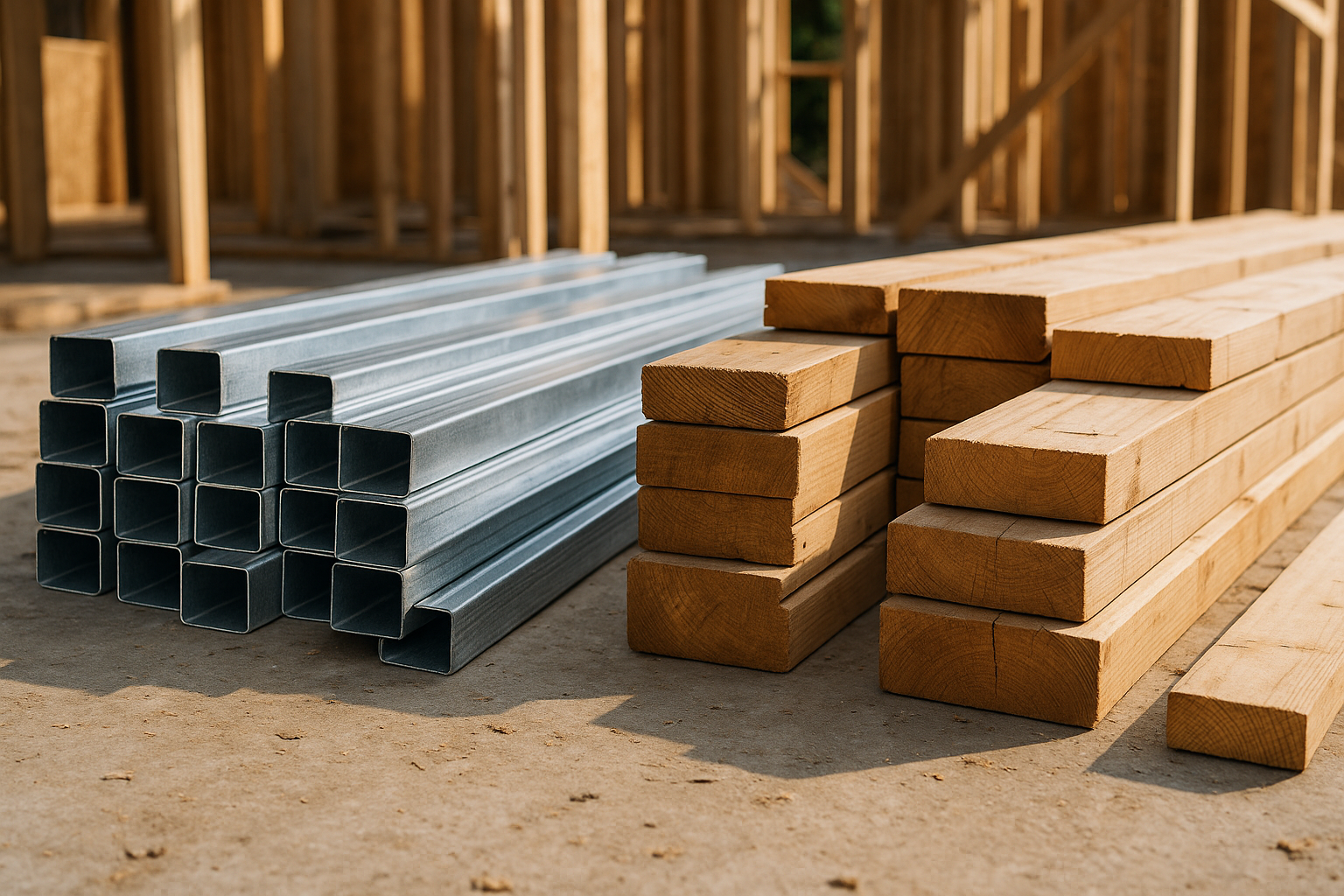
Steel vs. Wood Framing: An Honest Materials Talk
We frame in both. Where steel genuinely wins, where wood still makes sense, and why the answer follows the building — not the trend.
Steel-frame homes stopped being exotic around here years ago — but that doesn’t make wood wrong. We build with both, so here’s the materials talk without a side to sell.
Where steel genuinely wins
- Clear spans: wide-open rooms and shop bays with no load-bearing walls in the way.
- Straight and stable: steel doesn’t warp, twist, or interest termites.
- Fast dry-in: shell up and weather-tight quickly — a real advantage in a Texas spring.
- Big-structure economics: the larger the footprint and spans, the better steel pencils.
Where wood still makes sense
- Conventional neighborhoods: deed-restricted communities often expect conventional construction and finishes.
- Certain architecture: some traditional styles simply detail better on wood framing.
- Familiar trades everywhere: every finish trade in Texas grew up on stick framing.
“Pick the frame the building wants, not the one the internet is arguing about this month.”
The materials rule
The part both share
Either way, the slab gets engineered from a soil report on your land, the insulation gets designed for Texas summers, and every bid stays visible. Frame choice changes the skeleton — it doesn’t change how we run the numbers. The deeper dive lives in barndo vs. custom home.
Keep reading
- Barndo vs. custom home: the full comparison
- What drives cost either way
- A steel build in progress right now
Torn on the frame?
Tell us about the land and the building — you’ll get the honest answer, and open numbers for both if it’s close.