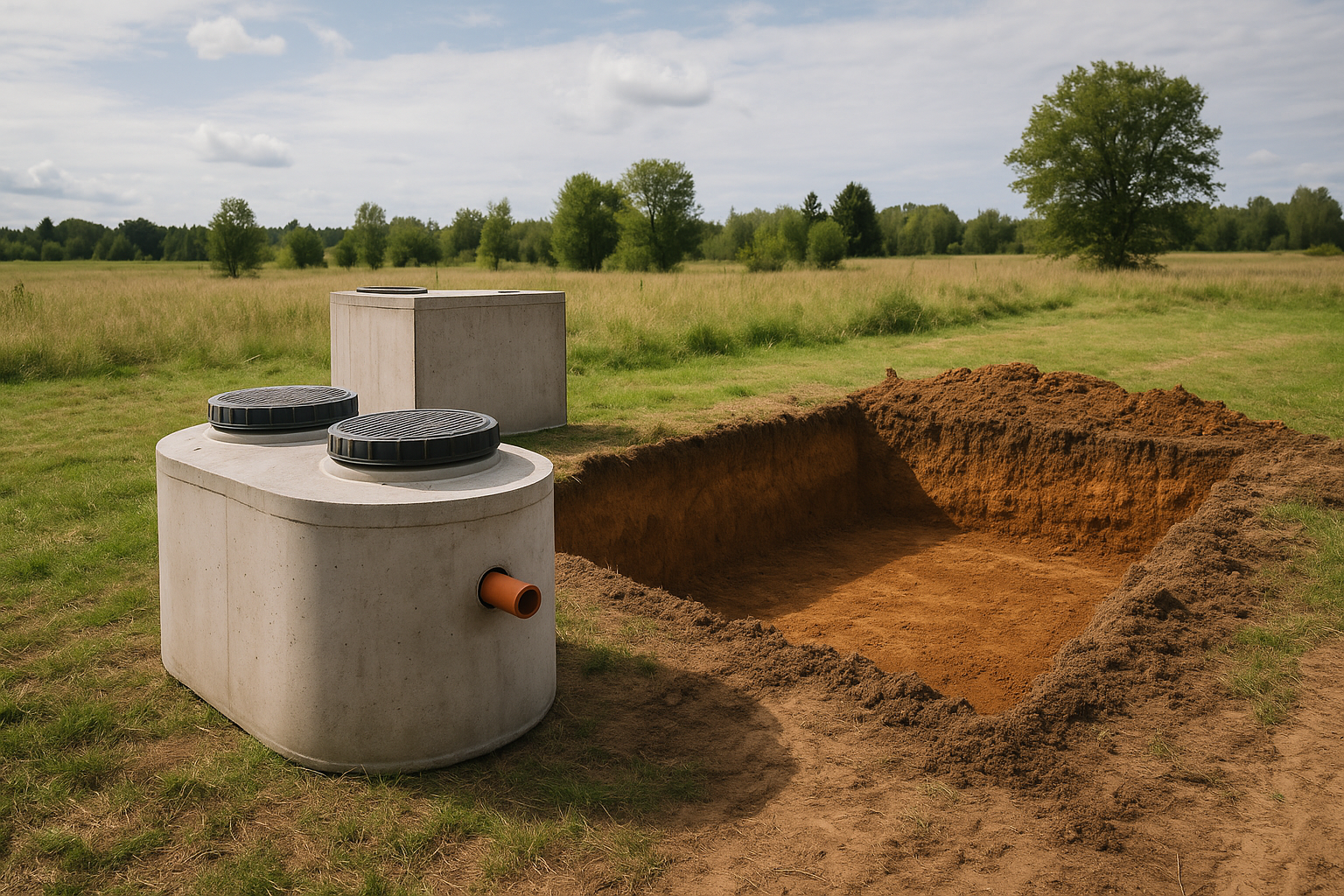
Septic 101 for Acreage Owners: Aerobic vs. Conventional, Plainly
Your soil — not your preference — usually picks your septic system. The plain-English version of aerobic vs. conventional for acreage owners.
No city sewer means a septic system, and here’s the part that surprises people: you mostly don’t get to choose which kind. Your soil does. Here’s the plain-English version we give at the table.
The two systems you’ll actually see
Conventional (anaerobic)
The classic tank-and-drainfield. Simple, fewer moving parts — but it needs soil that drains well enough to pass a percolation evaluation, and enough open area for the field.
Aerobic (ATU)
Adds air to treat water to a higher standard, then typically sprays or drips it. Works on the tight clay soils common around here — the reason so many North Texas installs are aerobic — and comes with electrical parts and a maintenance relationship.
How the decision actually happens
- Soil evaluation
A qualified site evaluator tests your soil — this is the step that picks your system type.
- Design & permit
The system is designed and permitted for your county, your soil, and your home’s size.
- Install with the site plan
Tank, field or spray area, and setbacks placed so they don’t fight the driveway, the well, or the shop you’ll want later.
“Plan the septic with the whole homesite — the system you can’t see should never block the shop you can.”
Septic and site planning
The maintenance truth
Every septic system is a small utility you own. Conventional wants periodic pumping; aerobic adds inspections and parts that can wear. None of it is scary — all of it belongs in the conversation before you build, which is why septic is a named line in our build-on-your-land process, priced for your tract, openly.
Keep reading
- Wells, septic, and power runs: the site-work chapter
- Springtown & north Parker acreage builds
- The open-book cost guide
Buying land without sewer access?
Ask us what your soil likely means for septic before you close — that conversation is free.